Your buy box page.
The areas, prices and property types you buy, and what you won’t touch, so agents only send what fits.

Agents, sellers and lenders all check you out before they trust you. Your website shows what you buy, how you close and who’s behind it, so the next one sends the deal or signs the contract instead of asking. I build it around your own story, on a site you own.
No new software to learn. If you can send a text, you can use it.
A website isn’t there to look shiny. It’s your credibility, and it answers what everyone asks before the first call.
Your Company Name
Real estate investor · Orlando
What they buy
How they close
Proof of funds
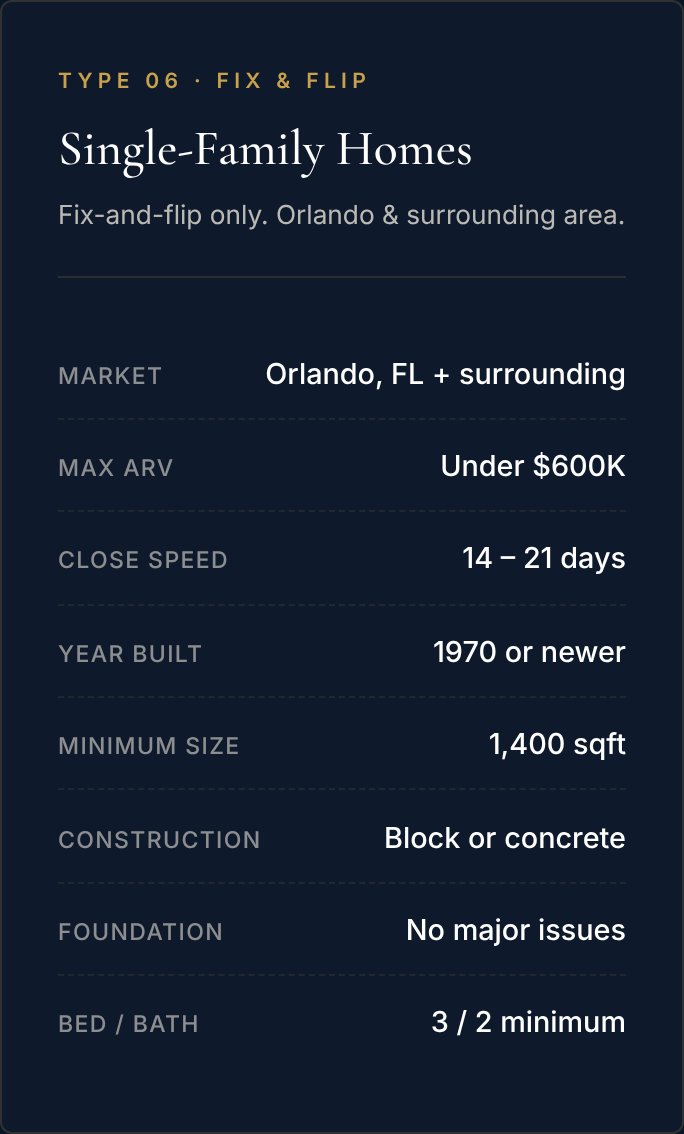
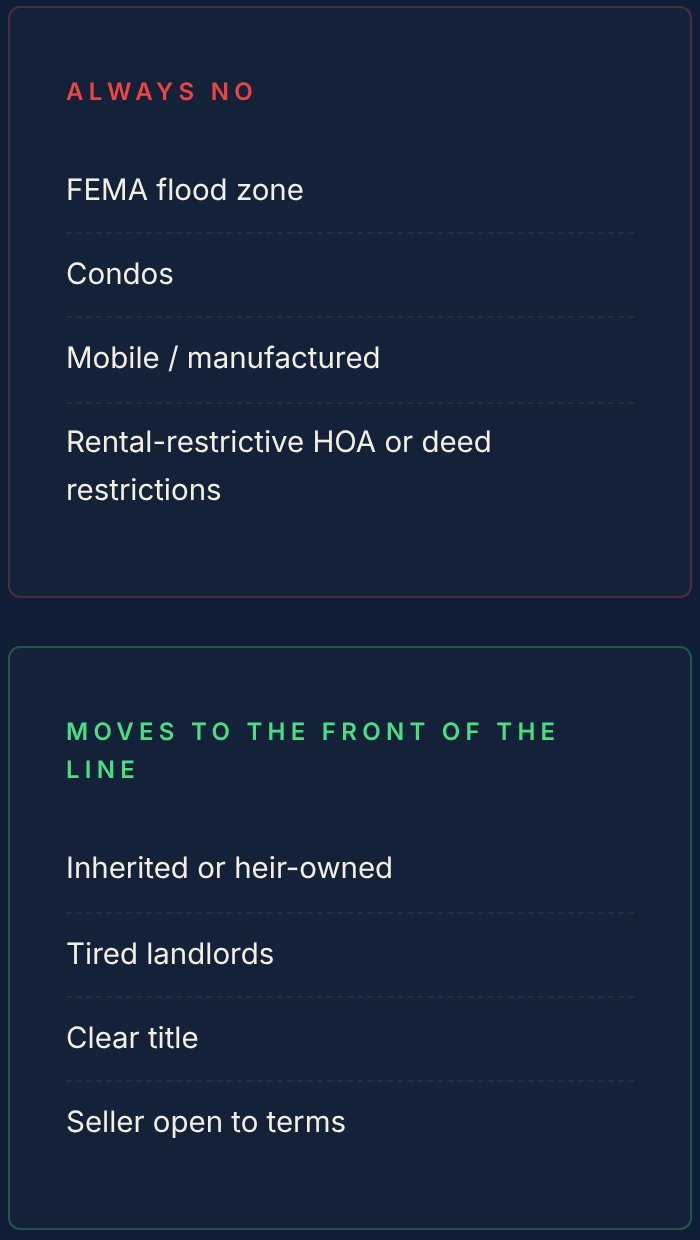
I’m an investor too. Agents kept asking if I had a website, so I built one. These are screenshots of my own buy box page.
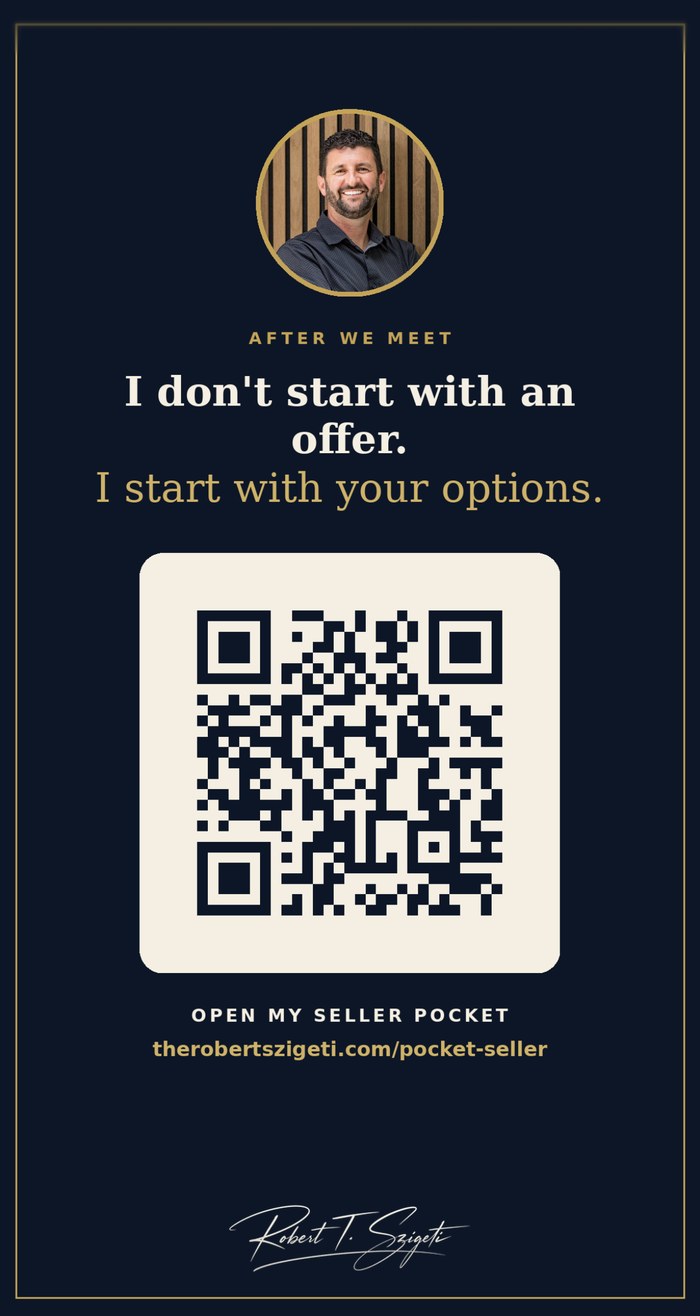
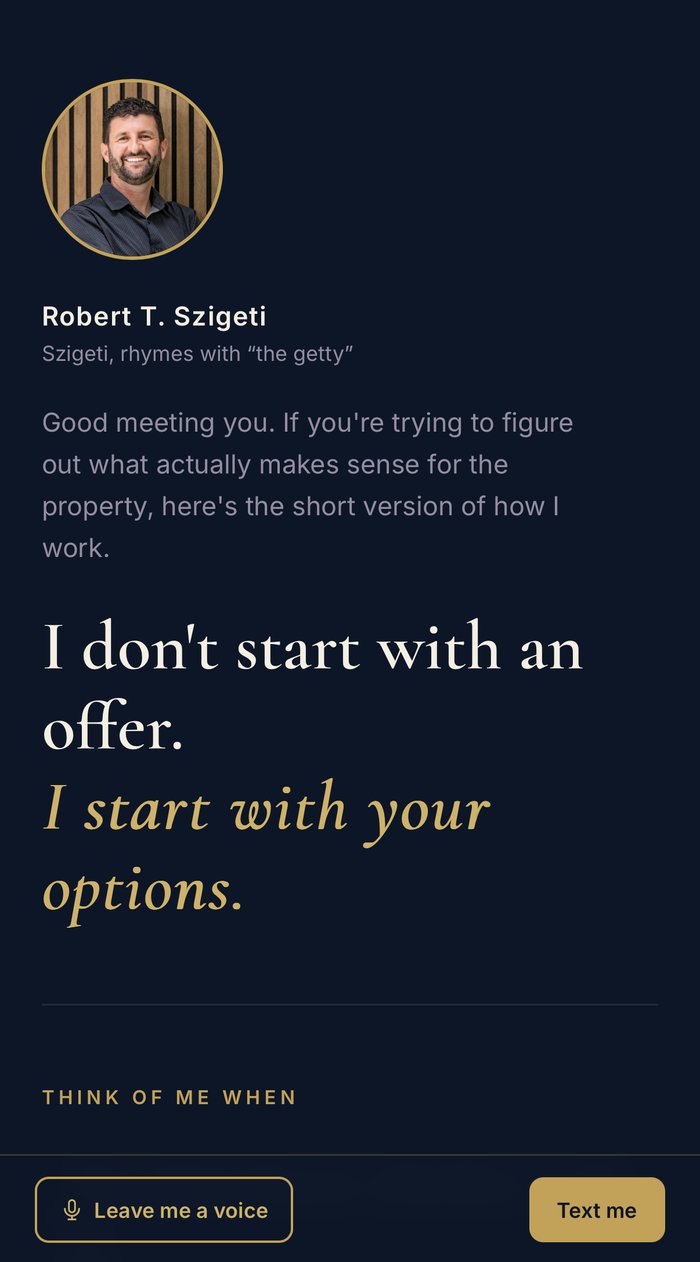
A business card ends up in a drawer. A pocket page opens on their phone with your photo, what you do and a way to reach you, right there at the meetup or the showing.
Bird dogs, wholesalers, agents and owners all send deals differently: a text, a voicemail, a screenshot. One deal page gets every one of them to you the same way.
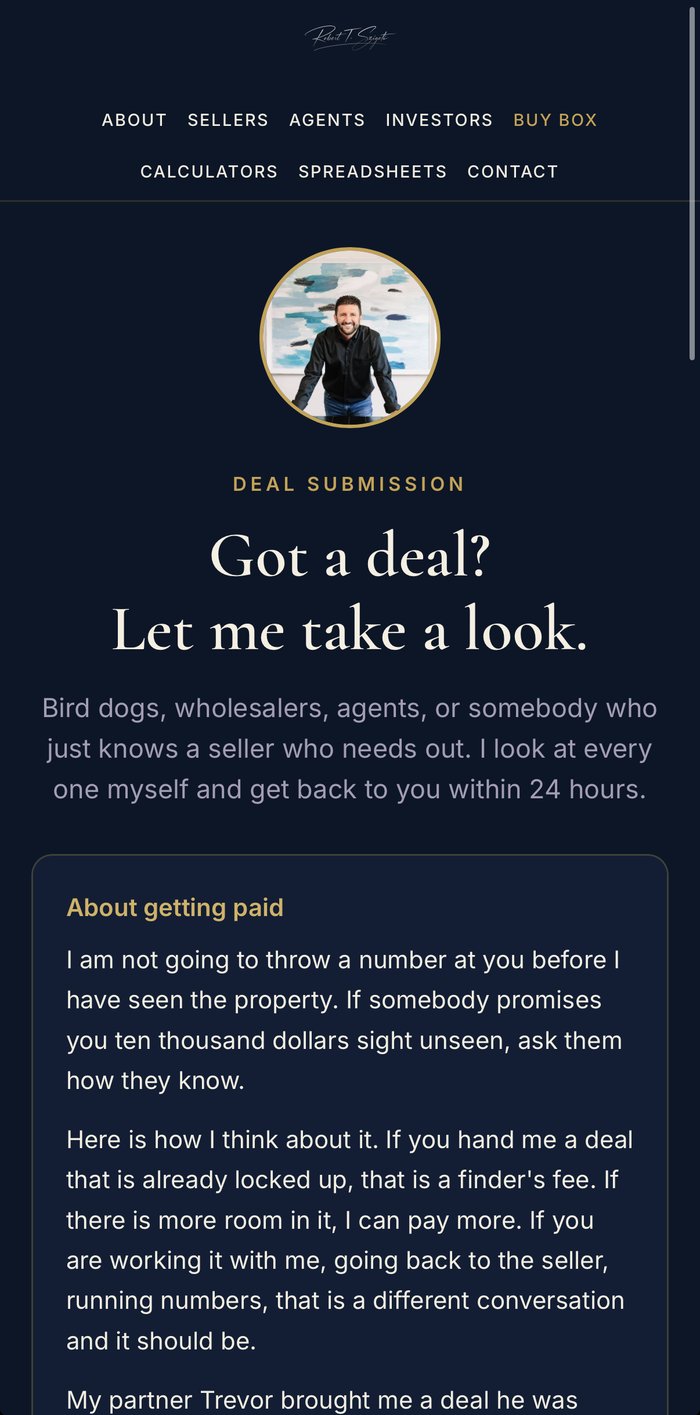
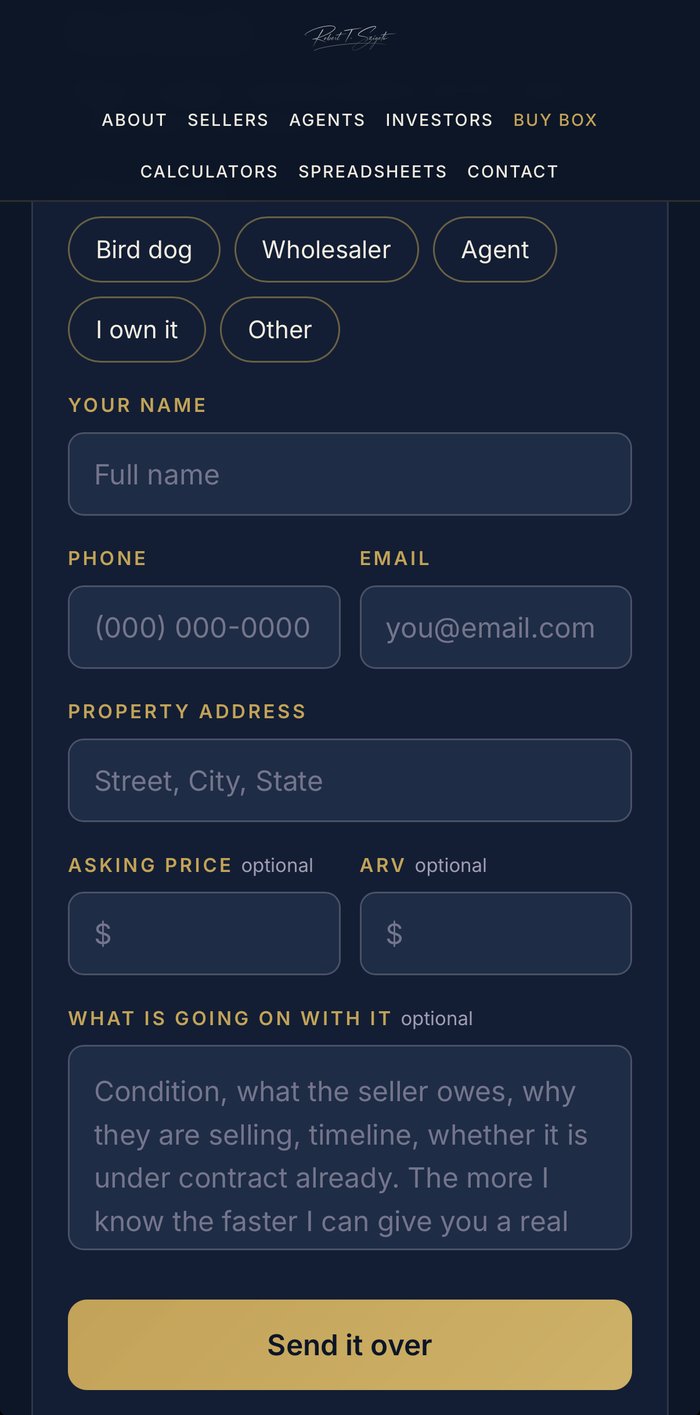
Built around how you already buy. You run it from your phone.
The areas, prices and property types you buy, and what you won’t touch, so agents only send what fits.
Address, asking price, condition and whether the seller is open to terms, in one form instead of a long text thread.
An automatic reply tells the agent you got it and when you’ll come back with a yes or no.
Who you are, the deals you’ve done, and the contractor and lender behind you, for the lender checking before they fund.
It’s credibility, not decoration. Sellers ask me “What company are you with? Do you have a website?” before they let me in the door, and agents and lenders ask the same thing. Your website is where they go to check you, so it has to show who you are, what you buy and how you treat people.
If you only sell contracts to a buyers list you already have, maybe not yet. Once you want sellers trusting you, agents sending you deals or lenders funding you, your website is the first thing they check. Lenders look at it for professionalism and a track record before they fund (DealRun). A Facebook page or a business card doesn’t say what you buy or how you close.
Agents hear from “cash buyers” every week, and plenty of them never close. They send deals to the ones who make it easy: a clear buy box, proof of funds when asked, a fast reply and a closing timeline (Goliath Data). A page that shows all of that answers the question before they ask it.
A one-page deal package with the price, the scope of work, the after-repair value, the comps and how you’ll pay them back (Lendmire). Lenders who fund first-time flippers also look for a strong contractor team to make up for the missing track record (Capital Funding). Your site can show that team now and add before-and-after photos when your first deal closes.
Be careful. In Florida you can sell your rights in a contract without a license, but publicly advertising the property itself can count as unlicensed brokering, which is a third-degree felony (Florida Statutes 475.42, LegalClarity). I don’t build a deal-listing page unless a Florida real estate attorney reviews it first. A buy box and a deal form are about deals coming to you. I’m not a lawyer, so ask yours about your setup.
Many agents have never done a terms deal, and some steer sellers away from investors who offer one. A plain-words page on how terms work, what happens to the seller’s loan and how the seller is protected gives the agent something to read before they hang up, and something to show the seller.
Carrot’s individual plan is $119 a month, or $99 billed yearly (Carrot pricing). The complaint I hear from users is that the sites look alike, and if you leave, the template content stays behind (Reddit). I build your site around your own story and your own buy box, on your own domain, and you own it.
AI tools like ChatGPT pull from search engines such as Google and Bing. Carrot’s own CEO has said investors who never made Google’s first page get recommended by ChatGPT when they have a complete Google profile, reviews, the same business details everywhere, and real deal examples (Real Estate Skills). More on why a business may not show up on Google.
Usually one of six things: an unverified profile, the wrong categories, details that don’t match, too few reviews, a website that’s too vague, or a competitor doing all of it. You don’t fix any of it. I set up your Google profile, your Bing and Apple Maps listings, the pages that answer the questions sellers and agents ask, and a review request after each closing. Here’s everything I set up.
You own it, on your own domain. After launch I keep it updated and running with a care plan, from $99 a month.
Yes. I’m in Palm Coast, and my connections reach well past it. I work with investors across Florida and in other states, like Texas and Arizona. A website works the same wherever you buy, and we meet by video when that’s easier.
Start with a short conversation about your project and whether we’re a good fit. Custom websites from $3,000, a two-page Starting Point from $1,500, and care after launch from $99 a month.
Already buying? Start with a conversation. No clock and nothing to pay. Two days later you get one page from me: what I heard, what I’d build and what it costs.
Just starting, or not sure of the direction? Ninety minutes, recorded, and a written plan within three days: what makes your work yours, the stories worth telling, a first line for your homepage and an honest next step. It’s yours to keep, and the $347 comes off a build within 30 days.
Rather talk than book? Tell me your story.
Tell Me™
Tap to start talking
I’m listening. Tap the square when you’re done.
0:00
Here it is. Listen back if you want, then send it, or record it again.
Thanks for telling me about it. I’ll hear the whole thing, start to finish, and get back to you myself.
Your recording comes to me and no one else. It is never posted, shared, or used anywhere.